
When to Climb Kilimanjaro: Best Months for Summit Success
Deciding when to climb Kilimanjaro is one of the most consequential choices you'll make before you ever set foot on the trail. Mount Kilimanjaro is open to climbers every month of the year, but the difference between a strong summit push and a frustrating turnaround often comes down to weather, trail conditions, and how well the mountain's seasonal rhythms match your preparation. The dry seasons deliver the highest summit odds and most reliable conditions, but each window offers something distinct, and knowing which one fits your situation changes everything about how you plan.
Two distinct dry-season windows exist on Kilimanjaro, and each one has its own personality: different temperatures, different crowd levels, different price points, and slightly different summit success rates. Most first-time climbers don't realize the choice between those windows matters as much as it does. By the end of this guide, you'll know which window fits your goals, what conditions actually feel like at each altitude, and how far ahead you need to book to secure your preferred route and crew.
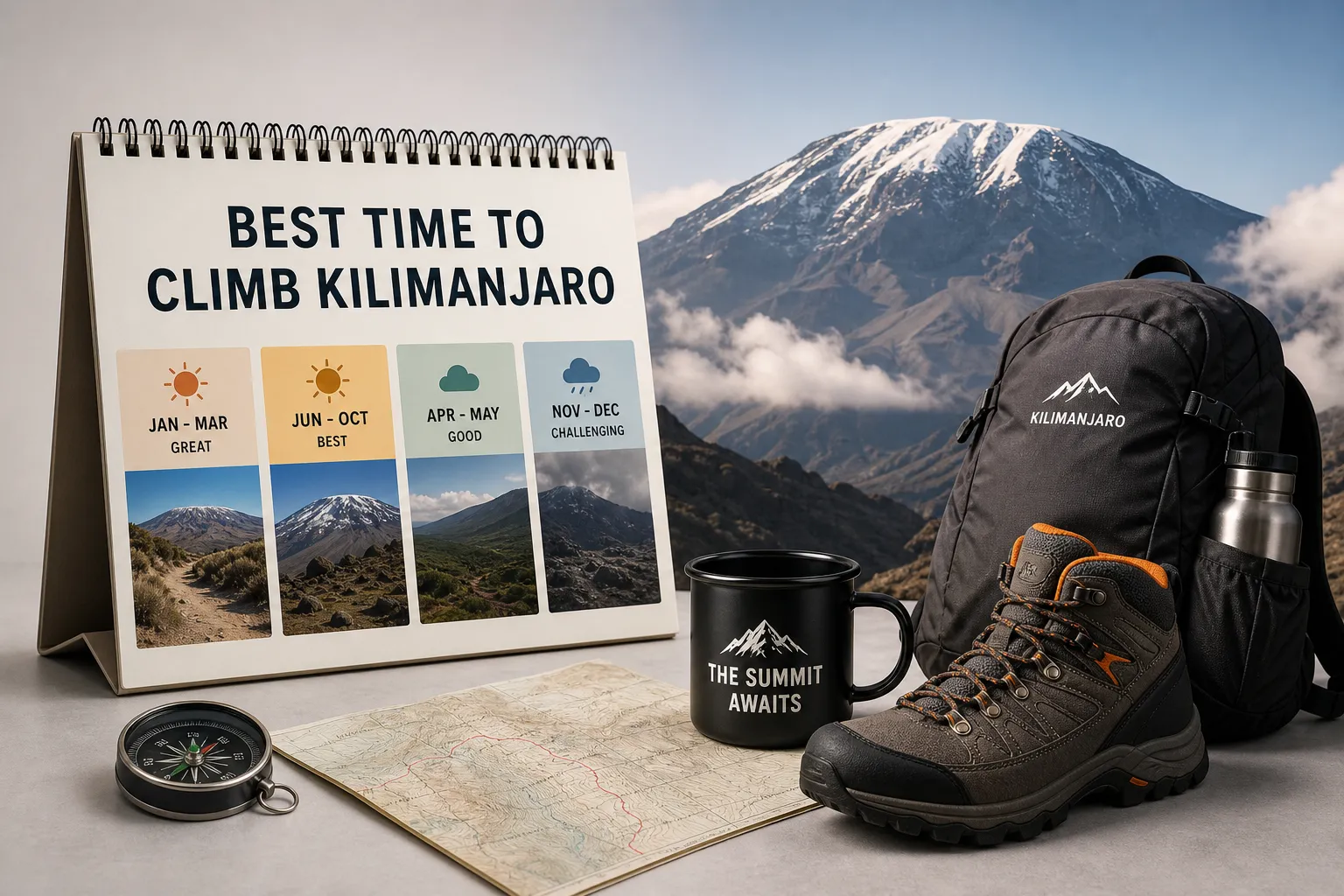 The two climbing windows that define Kilimanjaro's calendar
Kilimanjaro's weather follows a clear seasonal rhythm built around two dry periods and two rainy periods. The dry windows are when summit success rates are highest and trail conditions are most reliable, everything outside them involves meaningful trade-offs. The two windows are January through early March (the short dry season) and late June through October (the long dry season). Between them sit two rainy periods: late March through May, which is the longest and wettest stretch, and November into early December, which brings shorter but still disruptive rains.
Short dry season vs. long dry season at a glance
The short dry season runs warmer, with fewer crowds and lower prices. The long dry season runs colder but delivers exceptional visibility, and it draws the mountain's heaviest traffic. Think of this as a decision fork: do you want warmth and quiet, or do you want maximum summit odds and postcard-perfect views even if that means sharing the trail with more climbers? The sections below break both windows down in full so you can make the call with clear information.
Months that fall outside both windows
April, May, and November are worth understanding honestly rather than avoiding reflexively. Climbers do reach the summit in all three months. Success rates across all major routes drop significantly during these periods, and the trail experience is fundamentally different, a dedicated section covers these months at the end of this guide so you can weigh the trade-offs honestly.
When to climb Kilimanjaro: January to March
The short dry season is genuinely underrated by climbers who default to the summer peak without examining the trade-offs. January through early March delivers relatively clear skies, warmer temperatures at every altitude, and significantly fewer people sharing the trail with you. Summit success rates on well-structured 7-day routes run strong here, typically in the 72, 85% range, and the reduced congestion means a more personal climb with better access to camp space and guide attention.
February is generally the warmest month on the upper mountain during this window. At altitude, where cold is one of the biggest comfort variables, that warmth is a genuine advantage. By late March, the first signs of the approaching long rains begin to appear, so timing matters within this window. January and February are the sweet spot; March is workable but requires flexibility.
Kili weather by month: what conditions feel like by altitude
In the lower forest zone, expect warm and humid conditions, roughly 15, 25°C, with lush vegetation and generally pleasant trekking. The alpine desert zone above 4,000 meters brings cool daytime temperatures and cold nights, but conditions stay largely dry through February. At Uhuru Peak, summit temperatures during this window typically range from -7°C to -12°C before dawn, cold, but manageable with the right gear. The important distinction is that summit pushes in this window are colder than base-elevation conditions suggest, so layering strategy still matters.
Crowd levels and cost advantages
January and February sit between the holiday surge and the summer peak, making this one of the most accessible windows for route availability and pricing. Trail congestion is noticeably lower than in July or August, and package prices from local operators typically run $700, $1,000 less per person than peak-season rates. Booking 3, 6 months ahead is still the right move, especially for routes like Machame or Lemosho where demand stays consistently high even in quieter months.
When to climb Kilimanjaro: the long dry season (June to October)
This is the stretch most climbers picture when they imagine their Kilimanjaro expedition. The long dry season delivers very low precipitation, exceptional summit visibility, and the highest success rates on the mountain, often 85, 95% on 7-day and longer routes with a quality operator. The panoramic views from the upper mountain during July, August, and September are genuinely extraordinary on clear days. The trade-offs are real, though: this is also when the mountain is at its most expensive and most crowded.
Why July through September is the benchmark for Kili climbers
These three months offer the best combination of trail stability, weather consistency, and summit visibility on the mountain. Dry trails mean less physical energy wasted on mud and slippery rock, which directly benefits acclimatization efficiency and daily pacing. When your legs aren't working overtime on difficult terrain, your body conserves energy for altitude adjustment, and that matters enormously above 4,500 meters.
Temperature reality at high altitude in peak season
The cold in this window is the honest trade-off nobody should underestimate. Barafu Base Camp at 4,673 meters regularly drops to -10°C or colder at night. Uhuru Peak during a summit push can hit -15°C to -20°C before dawn, with windchill pushing the perceived temperature lower still. Gear quality and layering strategy matter more in this window than at any other time of year. That's not a reason to skip peak season, it's a reason to prepare specifically for it and work with guides who know how to pace summit departure timing to match conditions.
Crowd density and what it means for your experience
July and August are the busiest months on the mountain, full stop. Popular camps like Barranco and Barafu fill up, and the Machame Route can see 50, 80 climbers starting per day at peak. Lemosho is generally less congested than Machame but still operates near capacity in July and August. Permits and guide slots on the best routes book out months ahead, and waiting until 6, 8 weeks before your climb date in peak season means accepting whatever's left rather than what you actually want.
How season shapes your Kilimanjaro summit success rate
Summit success on Kilimanjaro comes down to two variables: weather conditions and acclimatization quality. Season affects both directly. In the dry windows, nearly all summit failures trace back to altitude-related causes. In the rainy seasons, weather adds a second layer of difficulty that compounds fatigue and disrupts pacing, which then worsens altitude response. Dry-season climbs on 7-day routes see roughly 70, 95% success depending on route and operator; rainy-season climbs on the same routes often fall to 40, 60%.
How acclimatization quality changes by season
Wet, cold, and overcast conditions increase physical fatigue during the lower forest and moorland sections, slowing the body's adjustment before it even reaches the higher altitude zones. The lower slopes in April and May become extremely muddy, adding hours of physical effort to each day and reducing the energy available for altitude adaptation. Stable dry-season weather supports consistent "walk high, sleep low" pacing, the single biggest behavioral factor in improving summit success rates across all Kilimanjaro climbing seasons.
How experienced local guides adjust for each season
This is where the difference between a route-aware local guide and a generic itinerary becomes most visible. The guides at Kilimanjaro Local Trips read seasonal conditions and adjust daily mileage, rest intervals, and hydration strategies accordingly. In the cold peak season, summit push departure times are paced differently than in the warmer January window to account for temperature exposure and physical readiness. In shoulder months, route choices shift toward terrain with better drainage to minimize mud exposure. These adjustments don't show up on a booking page, they come from years of reading the same mountain across every season.
Months to approach with caution: the rainy seasons
Some climbers succeed in April, May, and November every year. Success rates across all major routes drop significantly during these periods, and the trail experience changes in ways worth understanding before you commit. This isn't about fear; it's about arriving with the right expectations and preparation.
April and May: the long rains and why success rates dip
April is typically the wettest month on Kilimanjaro. Lower slopes turn muddy, visibility often closes in, and camp life requires a different kind of mental toughness. Success rates across the mountain drop to roughly 40, 60% during this window. The trade-offs are real, though: trails are nearly empty, and operators often offer packages at 10, 30% below peak pricing. Climbers who choose this window knowingly, with the right gear and the right operator, do reach the summit. The conditions simply demand more from you.
November and the short rains: a mixed picture
November brings the shorter rainy season, which is less intense than the April, May period but still reduces summit odds compared to the dry windows. Some years the rains arrive late or stay mild; others they're more disruptive from the start. Success rates sit roughly in the 52, 65% range. Climbers who specifically want solitude sometimes choose early November before conditions solidify, and that strategy can work well with an experienced guide monitoring the forecast closely.
Choosing your window and locking in your spot
The decision comes down to what you're actually optimizing for. If summit success is the top priority and you can tolerate genuine cold, July through September is the answer. If warmth, a quieter trail, and lower prices matter more than peak-season performance, January and February make a compelling case. If budget is the primary driver and you have experience in challenging conditions, late November or the March shoulder window can work with the right operator and a clear-eyed approach to the trade-offs.
Matching the season to your priorities
Work through three variables in order: your cold tolerance, your schedule flexibility, and your crowd preference. Peak season delivers the best odds but demands the most gear preparation and the most lead time on bookings. The warm quiet season delivers a genuinely excellent climb with less pressure on all three fronts. Shoulder and rainy months require experience, flexibility, and a guide team that knows how to read conditions in real time rather than following a fixed script.
Why booking 3, 6 months ahead changes everything
Peak-window permits, quality guide assignments, and route slots on Machame and Lemosho fill up months before the climb date. Working with a trusted local operator like Kilimanjaro Local Trips early in the planning process means access to the best crew assignments, preferred camping spots, and the kind of pre-trip preparation advice that only comes from guides who live and work on this mountain year-round. Booking 3, 6 months out isn't cautious planning, it's the difference between the climb you want and the one that was left over. Depending on your preferred window and route, some operators recommend securing your spot as much as 6, 8 months out for July and August departures.
The right time to climb Kilimanjaro isn't a single answer stamped on a calendar. It's the window that matches your goals, your schedule, your cold tolerance, and how much company you want on the trail. Understanding the full seasonal picture and working with guides who live this mountain year-round gives you the best odds of standing at Uhuru Peak. Reach out to the team at Kilimanjaro Local Trips for a personalized recommendation based on your timeline, we'll help you figure out exactly when to climb Kilimanjaro in a way that gives you the best shot at the summit you came for.
Frequently asked questions about when to climb Kilimanjaro
When is the best time to climb Kilimanjaro?
The best months to climb Kilimanjaro are January, February (warm, quiet, and affordable) and July, September (coldest but with peak visibility and the highest summit success rates). Both windows fall within Kilimanjaro's dry seasons and offer significantly better odds than the rainy periods in April, May and November.
How do the seasons affect summit success on Kilimanjaro?
Dry-season climbs on 7-day routes achieve roughly 70, 95% summit success rates depending on the route and operator. Rainy-season climbs on the same routes typically see rates of 40, 60%, as wet conditions add physical fatigue and compound the challenges of altitude acclimatization.
How far in advance should I book a Kilimanjaro climb?
For peak-season months (July, September), booking 6, 8 months ahead is strongly recommended to secure preferred routes, quality guides, and permit availability. For the January, February window, 3, 6 months ahead is typically sufficient, though earlier is always better for popular routes like Machame and Lemosho.
Is it possible to climb Kilimanjaro in the rainy season?
Yes, climbers reach the summit in April, May, and November every year. However, trail conditions are significantly more demanding, success rates drop, and the experience requires stronger mental preparation and more experienced guide support. The upside is near-empty trails and lower operator pricing.