
Climbing Mount Kilimanjaro Tours: The Complete Guide
If you're researching climbing Mount Kilimanjaro tours, you've probably already noticed the problem: most people spend months dreaming about the summit and only a few days understanding what they're actually booking. That gap is where summit attempts go wrong. Choose the wrong route, book through the wrong operator, or underestimate how much itinerary length matters, and you can find yourself turning back at 17,000 feet wondering what happened.
This guide cuts through the noise. You'll get a straight-answers breakdown of the five main routes, what a real package includes (and what it doesn't), honest 2026 pricing, and the factors that separate climbers who reach Uhuru Peak from those who don't. By the end, you'll know exactly what to book and why. If you're ready to move forward, a locally owned operator like Kilimanjaro Local Trips runs fully customized climbs with KINAPA-certified mountain guides, KPAP-compliant porter support, and transparent USD pricing, no foreign agency markup, no surprises on the mountain.
Climbing Mount Kilimanjaro Tours: Route Comparison
There are five main routes up Kilimanjaro, and they are not interchangeable. Duration, terrain profile, acclimatization quality, and crowd levels differ significantly across each one. The route you choose is arguably the single biggest variable within your control. For a detailed breakdown of each option, see Mount Kilimanjaro Climbing Routes: The Complete Guide, Kilimanjaro Local Trips.
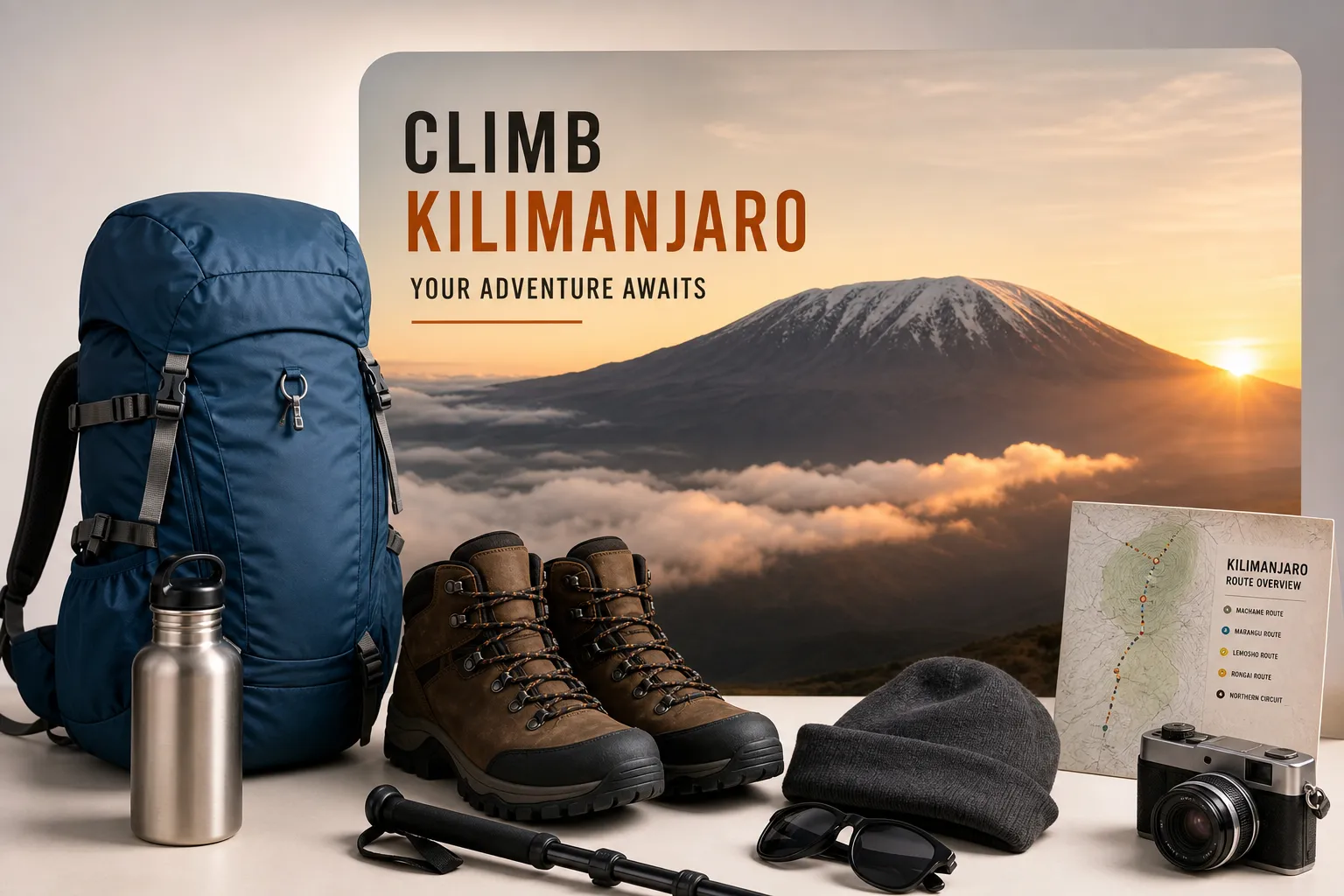
Machame and Lemosho: the highest-success scenic options
The Machame Route (6, 7 days) is the most popular choice for serious climbers, and the reasons are well documented. On a 7-day itinerary, it delivers roughly an 85% summit success rate by building in the "climb high, sleep low" acclimatization pattern that altitude physiology research consistently supports. The route includes the iconic Barranco Wall, a steep rock scramble that is physically demanding but gives the body critical altitude gain before descending to sleep lower. It's challenging, scenic, and built for success when paired with the right itinerary length.
Lemosho (7, 8 days) is the quieter, more remote alternative, starting on the western side of the mountain before joining a similar acclimatization profile. An 8-day Lemosho itinerary pushes summit success rates up to 96, 98%, see published Kilimanjaro success rate data for route-by-route trends. If you have the time and want the best physiological odds available, Lemosho on an 8-day schedule is hard to beat.
Marangu, Rongai, and the Northern Circuit: what separates them
Marangu is often marketed as the "easy route" because it's the only one with hut accommodation. Don't let that fool you. A 5-day Marangu itinerary produces success rates as low as 27%, and even 6 days only gets you to around 44, 56%. The gradual, steady ascent without meaningful altitude fluctuation means the body never gets the acclimatization stimulus it needs. Marangu is the cheapest option on paper and one of the most expensive in terms of summit probability.
Rongai (6, 7 days) approaches from the north, offering a steadier climb with less daily altitude variation. On a 7-day schedule, you're looking at around 65, 80% success rates, solid, but below Machame and Lemosho. The Northern Circuit is the longest route at 8, 9 days, circling the northern slopes with success rates between 95, 99%. It's the right choice for travelers with flexible schedules who want the highest possible odds and a dramatically different perspective of the mountain. For most American travelers on a 10, 14 day Tanzania trip, a 7-day Machame or 8-day Lemosho hits the sweet spot between time, cost, and summit probability.
What a standard Kilimanjaro tour package includes (and what it doesn't)
Understanding what's in your package price prevents the most common source of frustration: budget shock after you've already booked. Reputable operators build their Kilimanjaro treks around a clear set of inclusions. Knowing the list lets you evaluate quotes accurately.
The core inclusions: permits, crew, meals, and safety gear
Park fees, camping fees, conservation fees, and the mandatory rescue fee are all included in any legitimate package. For a 7-day Machame climb, those fees alone run around $956 per person after 18% VAT. That's why you'll often hear that government fees make up roughly 50% of total package costs, it's Tanzania's national park fee structure, not operator profit padding.
Professional certified guides, assistant guides, cooks, and porters are included, and their wages should meet KPAP (Kilimanjaro Porters Assistance Project) fair-wage standards. Three freshly prepared meals per day on the mountain, filtered water, camping tents, sleeping mats, a dining tent, pulse oximeters for daily health monitoring, and emergency oxygen tanks are all standard with a quality operator. At Kilimanjaro Local Trips, these aren't upsells, they're the baseline, because safety equipment and acclimatization monitoring are non-negotiable at altitude.
What you pay for separately
International flights, your Tanzania visa ($100 for US passport holders, who are required to purchase a multiple-entry visa), travel insurance with helicopter evacuation coverage, and personal hiking gear are all on you. Budget these in before you compare package prices, because they're real costs regardless of who you book with.
Crew tips are excluded but fully expected and culturally essential. Budget $250, $350 per person as a pooled amount for guides, porters, and cooks on a standard 7, 8 day climb. Solo travelers should budget closer to $350, $400. Hotel meals on arrival and departure days, single room supplements, and any extra hotel nights beyond included pre- and post-climb accommodation are also excluded. None of this is hidden if your operator communicates clearly upfront.
Climbing Mount Kilimanjaro tours: 2026 costs
Kilimanjaro tour prices in 2026 range widely depending on route, itinerary length, and operator tier. Solo versus group departures also shift the range considerably. Here's a grounded look at what reputable operators charge.
Realistic price ranges by itinerary length
- 5, 6 day itineraries (Marangu): $2,760, $3,000 per person for group departures
- 7, 8 day itineraries (Machame, Lemosho, Rongai): $2,800, $4,270 depending on operator tier and route
- 9, 10 day itineraries (Northern Circuit): $3,405, $4,550 for the longest, best-acclimatization options
Locally based operators like Kilimanjaro Local Trips consistently price below large Western agencies because there's no intermediary markup. You're booking directly with the team actually running your climb, which keeps costs fair and communication direct. Large international agencies frequently subcontract to local Tanzanian operators anyway, cutting out that layer saves money and gives you a direct line to the guides managing your safety on the mountain.
Why the cheapest option usually costs you the summit
Operators pricing under $2,300 are cutting something: guide certification, porter wages, safety equipment, or itinerary length. Any one of those cuts lowers your summit probability. A 5-day itinerary priced at $1,800 sounds like a deal until you understand that a 5-day climb carries a 27% success rate. Extending from a 5-day to an 8-day itinerary can shift your odds from under 30% to over 90%.
Think of the cost as an investment in summit probability. A $500 difference between a 6-day and 8-day package is the cheapest insurance policy you can buy on a trip you've already invested thousands of dollars and months of training to take.
The real factors that determine whether you reach Uhuru Peak
Fitness matters. Acclimatization matters more. And the quality of medical monitoring on the mountain can be the difference between catching early altitude sickness symptoms and getting forced off at high camp with full-blown acute mountain sickness.
Why acclimatization strategy matters more than fitness
The "climb high, sleep low" principle works because ascending to a higher altitude during the day, then descending to sleep at a lower camp, stimulates red blood cell production and gives the cardiovascular system time to adapt to reduced oxygen levels. Routes like Machame and Lemosho are engineered around this Kilimanjaro acclimatization itinerary pattern. Adding even one extra day to a Machame schedule lifts summit success rates by roughly 10 percentage points, based on operator-reported completion data, a significant physiological gain for a single additional day of travel.
Pre-trip acclimatization also helps. Spending a night at 7,000, 8,000 feet before flying to Tanzania, whether at a mountain destination or by using a hypoxic tent during training, gives your body a measurable head start. It's not a substitute for route length, but it compounds the advantage.
The physical and medical preparation most climbers underestimate
Six months of cardiovascular and leg-strength training is the baseline, not a suggestion. Squats, lunges, long hikes with a loaded pack, and sustained cardio build the endurance needed to push through summit night, which runs 12, 14 hours and covers nearly 18 kilometers of ascent and descent. The mountain doesn't care how motivated you are at base camp. For a structured training plan and timeline, follow Kilimanjaro Preparation: Your Complete 8-Week Guide, Kilimanjaro Local Trips.
On the mountain, reputable guides conduct daily health checks using pulse oximeters and stethoscopes to catch early AMS symptoms before they become descent-forcing events. Drinking 3, 4 liters of water daily and avoiding alcohol are simple habits that directly impact how your body handles altitude. Certified guides who hold a Wilderness First Responder (WFR) qualification are trained to act on those monitoring results, not just observe them.
How to choose the right operator for your Kilimanjaro climb
The operator you book with determines guide quality, porter treatment, safety protocol, and whether the itinerary you paid for actually matches what's described. This decision deserves the same research as your route choice.
Local vs. international operators: what the difference means for your climb
Locally owned Tanzania operators work directly with KINAPA-registered guides, set porter wages in line with KPAP standards, and carry none of the Western agency overhead. Kilimanjaro Local Trips is a Tanzania-based, locally owned operator offering fully customized climbing packages on the Machame Route (7-day) and other itineraries, with certified guides, KPAP-compliant porter support, transparent USD pricing, and 24/7 pre-trip support. Booking directly puts you in communication with the actual team running your climb, not a sales desk in another country.
Large international agencies typically subcontract their guided Mount Kilimanjaro climbs to local operators. You end up paying extra for the middleman while getting less visibility into who your guides actually are. Booking directly with a reputable local operator removes that layer entirely.
Key questions to ask before you book
Use these as a filter before committing to any operator:
- Is the guide KINAPA-certified and trained in Wilderness First Aid or Wilderness First Response?
- Does the package include emergency oxygen and daily health monitoring with pulse oximeters?
- What is the operator's documented summit success rate by route?
- Is the itinerary a minimum of 7 days?
- Does the company hold KPAP certification for fair porter wages?
Any reputable operator answers these questions directly and with specifics. Vague responses about "experienced guides" and "standard safety equipment" without documentation are a red flag. Kilimanjaro Local Trips checks every one of these boxes, it's the starting point for American travelers who want to commit to Kilimanjaro with real confidence.
Ready to climb? Here's your decision framework
The route you choose and the operator you book with are the two variables most within your control. Everything else follows from those two decisions. Pick a 7+ day itinerary on a route with a proven acclimatization profile, book with a KINAPA-certified local operator that meets KPAP standards, and train seriously for at least six months before departure.
For most American travelers, a 7-day Machame or 8-day Lemosho with a locally owned Tanzania operator is the clearest path to Uhuru Peak at a fair price. The Northern Circuit is the right call if you have the time and want the highest possible odds on the mountain.
When you're ready to compare climbing Mount Kilimanjaro tours and find the right fit for your schedule, budget, and fitness level, Kilimanjaro Local Trips is ready to help. Locally owned, staffed with certified guides, and built around transparent pricing with no hidden fees, reach out to start planning and get a detailed itinerary customized to your climb. You can also consult our Kilimanjaro Route Comparison: Which Route Is Best for Your Climb?, Kilimanjaro Local Tripsto finalize your route choice.