
Mount Kilimanjaro Climbing Routes: The Complete Guide
Before you buy a single piece of gear or book your flight to Kilimanjaro International Airport, choose which of the mount kilimanjaro climbing routes fits your goals, because that decision will shape everything about your climb. This isn't a cosmetic choice between scenic overlooks. The path you select directly determines how well your body acclimatizes, what your summit odds look like, how crowded your campsites will be, and what you experience across five ecological zones. One question we hear constantly at Kilimanjaro Local Trips is which route gives the best shot at the summit, and the honest answer is: it depends on your itinerary length more than anything else.
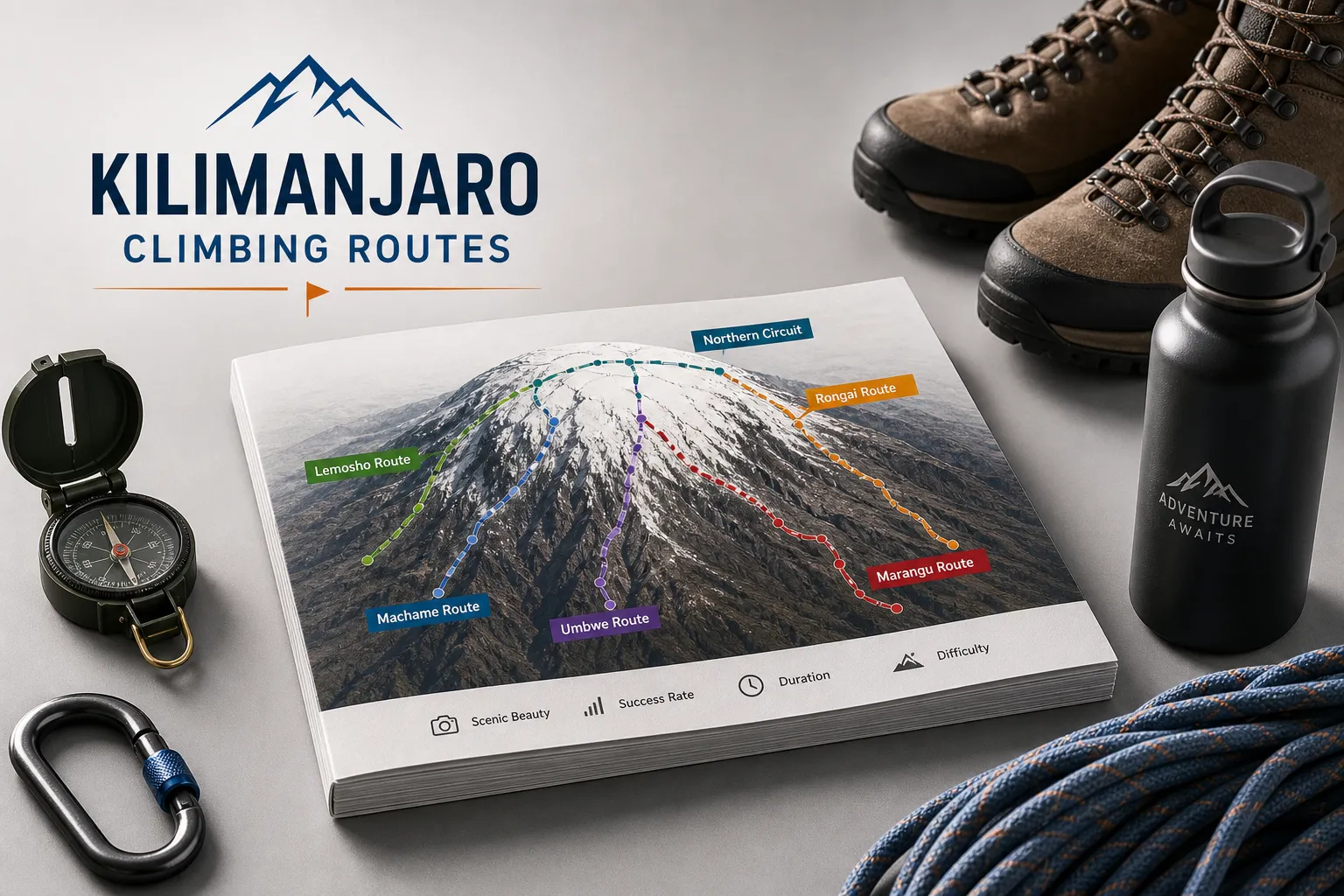
Most travelers arrive having heard of two options, Marangu or Machame, and assume the decision stops there. The real picture is more nuanced. There are five routes worth seriously considering: Machame, Lemosho, Marangu, Rongai, and Umbwe. The Northern Circuit deserves a mention too, for climbers with the time to do it properly. Kilimanjaro Routes Compared: Which Trail Fits You Best? walks through each one so you can match the right trail to your fitness, your schedule, and what you actually want from this climb.
 Why the route you pick matters more than most climbers expect
Route selection is a technical decision, not a lifestyle preference. The single biggest predictor of summit success on Kilimanjaro isn't fitness level or gear quality. It's how many days you spend on the mountain before summit night. Every extra day built into your itinerary gives your body more time to produce red blood cells, adapt to lower oxygen pressure, and recover from exertion before the hardest push of the climb.
Which mount kilimanjaro climbing routes give the best summit odds?
The numbers tell a clear story. A 5-day Marangu itinerary produces a summit success rate around 27%. A 6-day Machame sits near 44%. Push either route to 7 days and success rates jump to 64, 85%. An 8-day Lemosho reaches 85, 90%, and the Northern Circuit at 9 days hits 90, 95%. You're not just choosing scenery when you pick a route. You're choosing odds. For published statistics on summit success by itinerary and route, see an independent summary of Kilimanjaro summit success rate studies.
What "acclimatization" actually means in practice is this: above 3,000 meters, your body needs time to adjust to reduced oxygen. The best routes use a "climb high, sleep low" principle, taking you to higher elevations during the day and dropping you back to a lower camp overnight. Routes that are too short or too direct to include this cycling produce the low success rates you see on 5- and 6-day itineraries. Seven days is the minimum most experienced guides recommend; eight days is the sweet spot.
Compare mount kilimanjaro climbing routes: quick reference
Use this table to size up each route at a glance before reading the full breakdowns below.
| Route | Recommended Days | Success Rate | Difficulty | Typical Cost (per person) |
|---|---|---|---|---|
| Machame | 7 | 64, 85% | Moderate, Challenging | $2,200, $3,500 |
| Lemosho | 8 | 85, 90% | Moderate, Challenging | $2,500, $4,000 |
| Marangu | 6, 7 | 44, 50% | Moderate | $2,000, $3,200 |
| Rongai | 7 | 65, 80% | Moderate | $2,200, $3,500 |
| Umbwe | 6 | <27% | Very Difficult | $2,000, $3,200 |
| Northern Circuit | 9 | 90, 95% | Challenging | $3,800, $6,500 |
Machame route: the route most climbers choose for good reason
Machame is the most popular path up Kilimanjaro, and that popularity is earned. Starting at Machame Gate at 1,800 meters, the route climbs through dense rainforest before opening onto the Shira Plateau, traversing through moorland and the Karanga Valley, and ascending to Barafu Camp before the summit push. The descent runs via Mweka, covering roughly 62 kilometers of varied terrain across all five of Kilimanjaro's ecological zones.
What a 7-day Machame itinerary actually looks like day by day
Day one takes you from Machame Gate up to Machame Camp at 3,010 meters. Day two pushes to Shira Camp at 3,845 meters, where the plateau opens up and you get your first wide views of Kibo's summit cone. Days three and four move through Barranco Camp at 3,960 meters and up to Karanga Camp at 4,035 meters. The Barranco Wall crossing is a memorable physical challenge: a near-vertical scramble that requires hands and feet but no technical climbing experience. By day five you're at Barafu Camp at 4,640 meters, and summit night begins around midnight on day six.
Machame suits hikers with solid cardiovascular fitness who want a well-supported trail with good infrastructure at each camp. The tradeoff is crowd density. During peak season from July through September, Barranco and Barafu camps can hold hundreds of climbers and staff simultaneously. The 7-day version is strongly recommended over the 6-day option, as that extra day meaningfully improves your acclimatization window and summit odds. The guides at Kilimanjaro Local Trips run the route year-round and offer in-depth comparisons, see Machame vs Marangu: Choosing the Right Kilimanjaro Route for operator-specific advice and pacing strategies that protect acclimatization from day one.
Lemosho route: the strongest case for scenery and summit odds
When someone asks which route offers the best overall experience, most experienced guides who run all five routes land on Lemosho. It requires more time, with 8 days being the ideal itinerary, and typically costs more. But the success rates and solitude it delivers are hard to argue against. Lemosho starts from the remote western slope at Londorossi Gate, moves through untouched forest to Big Tree Camp at 2,900 meters, then pushes through Shira Camp 1, Moir Hut at 4,200 meters, and Barranco before joining the Southern Circuit toward Barafu.
Why 8 days on Lemosho changes your summit odds
The 8-day Lemosho itinerary includes a critical night at Kosovo Camp at 4,900 meters before summit night, a high-altitude staging point that gives your body an additional acclimatization window. That single difference pushes success rates from around 70% to 85, 90%. The route also spends more nights at higher elevations in the 3,500, 4,200 meter range before the final push, giving your system more time to adapt progressively rather than rushing the ascent.
Lemosho's early days cross terrain that the majority of Kilimanjaro climbers never see. The Shira Plateau section offers wide-open moorland views with Kibo's summit cone visible from miles away. By the time the route merges with Machame near Barranco, you've already completed days of remote mountain travel that the more crowded southern routes skip entirely. For travelers who want the best combination of summit probability and raw mountain experience, Lemosho on 8 days is the route to beat. Package pricing through a local Tanzanian operator typically ranges from $2,500 to $4,000 per person, all-inclusive of park fees, guides, porters, meals, and transfers.
Marangu and Rongai: two routes built for different priorities
Neither Marangu nor Rongai tops the "best overall" ranking, but each serves a specific type of climber well. Knowing which profile they fit prevents a bad match before you commit.
Marangu: the only route with hut accommodation
Marangu is the only Kilimanjaro route where climbers sleep in dormitory huts rather than tents. It ascends and descends the same eastern path, which limits the variety of terrain and scenery compared to routes that traverse the mountain. The 6-day success rate sits around 44, 50%, largely because the gentler gradient encourages operators to run it shorter than they should. If you genuinely cannot manage tent camping due to physical limitations or medical reasons, Marangu is a practical choice. Go in with realistic expectations about summit odds, and push for a 7-day option if your operator offers it. Hut fees run $60 per person per night versus $50 for camping routes. That makes it slightly more expensive per night, despite its reputation as the budget option.
Rongai: quiet, remote, and seriously underrated
Rongai approaches from the north, starting near the Kenyan border at 2,100 meters at Rongai Gate. It's the least trafficked of the main routes, and the northern terrain is noticeably drier and more open than the lush southern approaches. A 7-day Rongai itinerary produces success rates in the 65, 80% range, which is competitive with Machame at the same duration. For solo travelers who want a less social trail experience without sacrificing acclimatization time, Rongai consistently delivers. The route descends via the Marangu trail, so you exit through a different gate than you entered, a logistical note worth confirming with your operator.
Umbwe and the Northern Circuit: the extreme ends of the spectrum
Most climbers don't belong on Umbwe, and the Northern Circuit is a route most don't even know exists. Both are worth understanding before you book anything.
Umbwe: the steepest and most unforgiving path
Umbwe is a direct assault on the southern slope covering 37 to 51 kilometers depending on the itinerary. The route is steep throughout, with almost no margin for acclimatization built into the standard 5-day schedule. Summit success rates fall well below 27% on short itineraries. Umbwe makes sense only for experienced high-altitude trekkers who have previously summited peaks above 4,500 meters and specifically want a technical physical challenge. It is not a bucket-list route. It is a mountaineer's route, and the distinction matters.
Northern Circuit: the highest success rate available on the mountain
At 9 days and roughly 90 kilometers, the Northern Circuit is the longest Kilimanjaro itinerary you can book. It circles nearly the entire mountain before ascending to the summit, covering terrain on the northern and eastern slopes that no other route touches. Success rates consistently hit 90, 95%. The tradeoff is time and cost, with packages typically ranging from $3,800 to $6,500 per person. For climbers who have the flexibility to spend 9 days on the mountain, this route delivers the best summit odds and the most remote experience available anywhere on Kilimanjaro.
Matching the right route to your profile and what to do next
By this point, your options should be narrowing. Here's a fast hiker profile match to confirm your direction:
- First-time high-altitude trekker with solid base fitness: 7-day Machame or 8-day Lemosho
- Wants the best summit odds and can spare more time: 8-day Lemosho or the Northern Circuit
- Needs hut sleeping or cannot manage tent camping: 6-day Marangu, with realistic expectations
- Solo traveler who wants a quieter, uncrowded trail: 7-day Rongai
- Experienced high-altitude trekker (prior summits above 4,500m) seeking a technical challenge: 6-day Umbwe
One piece of advice the guides at Kilimanjaro Local Trips give every client: add one extra day to whatever itinerary you're considering, regardless of route. Summit night is harder than most people anticipate. The elevation gain from Barafu or Kosovo Camp to Uhuru Peak at 5,895 meters happens across hours of darkness, freezing temperatures, and significantly reduced oxygen. That extra buffer day isn't just for acclimatization. It means you arrive at base camp for summit night better rested and physiologically prepared. Booking through a locally certified Tanzanian operator also means your guide knows each camp's specific altitude conditions, the optimal pacing for each section of trail, and the early warning signs of altitude sickness that generic trip briefings miss entirely. For a broader overview of Kilimanjaro route options, see a practical Kilimanjaro routes overview.
The decision deserves more thought than most travelers give it
For most American travelers working with a standard vacation schedule and solid fitness, choosing the right mount kilimanjaro climbing routes comes down to two front-runners: Lemosho on 8 days or Machame on 7 days. Both deliver strong combinations of summit probability and mountain experience. For travelers who want maximum summit odds and have the time to commit, the Northern Circuit is hard to argue against. Marangu and Rongai serve specific needs well, and Umbwe belongs in its own category entirely.
Get your route decision right before you start thinking about gear, training, or flights, it sets the tone for the entire climb. The team at Kilimanjaro Local Trips runs all of these routes year-round and can match you to the right itinerary based on your fitness level, travel dates, and priorities. For a deep-dive comparison, consult Kilimanjaro Route Comparison: Which Route Is Best for Your Climb?. Reach out through our contact page to talk through your options with a locally based guide who knows this mountain from the gate to the summit sign.