
Best Kilimanjaro Route for Your Fitness and Goals
Choosing the best Kilimanjaro route matters more than raw fitness when it comes to summit success. Most climbers who fail on Kilimanjaro didn't fail because they were unfit. They failed because they picked the wrong route for the wrong duration. That single decision, made months before setting foot on the mountain, quietly determines whether you reach Uhuru Peak at 19,341 feet or turn back exhausted somewhere around 17,000. The mountain doesn't punish weakness; it punishes impatience and poor planning.
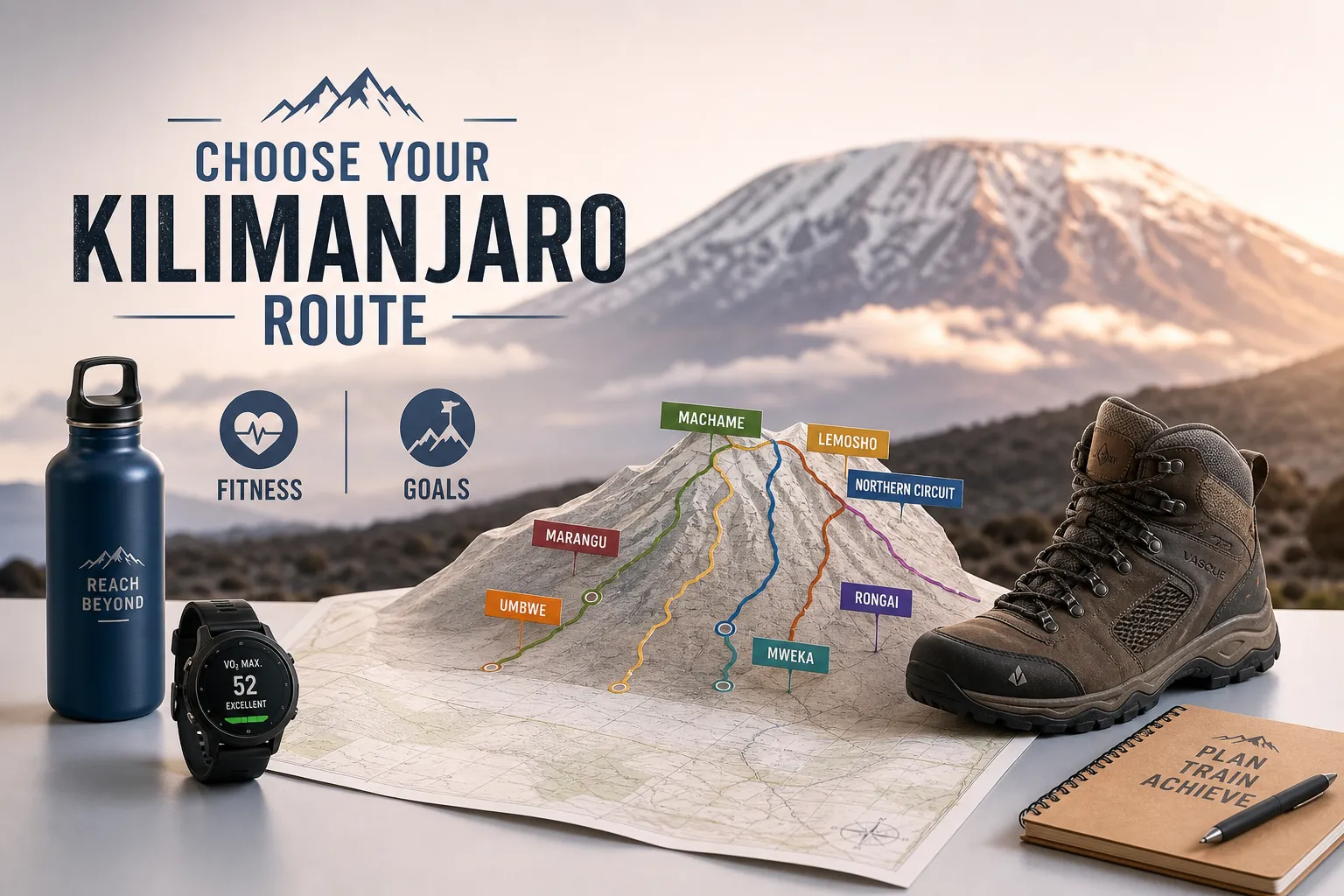
There are six major routes up Kilimanjaro, each with distinct trade-offs in difficulty, scenery, crowd levels, and acclimatization quality. At Kilimanjaro Local Trips, our certified local guides have led climbers on every major route for over a decade. The patterns they've observed are consistent and clear. This guide shares those patterns honestly so you can make a decision that actually fits your body, your schedule, and what you want the experience to feel like.
Why route choice matters more than your fitness level
The acclimatization principle that drives everything
The "climb high, sleep low" principle is the foundation of summit success on Kilimanjaro. Your body needs time to produce more red blood cells and adapt to reduced oxygen at altitude, and that process cannot be rushed by fitness alone. The data on itinerary length tells a consistent story: 5-day climbs average roughly 27% summit success, 7-day climbs reach 64, 85% depending on the route, and 9-day itineraries push success rates to 90, 95%, according to figures tracked across our operator data and corroborated by Kilimanjaro National Park reporting. The gap between 5 days and 9 days comes down almost entirely to acclimatization time, not the fitness of the climbers involved.
How route profiles create very different ascent experiences
Routes also differ significantly in gradient and daily elevation gain. Some routes, like Umbwe, gain altitude fast through steep, direct terrain. Others, like Lemosho, average roughly 598 meters of vertical gain per day, giving your body a much gentler adjustment curve. Understanding this difference is the right lens for evaluating each route below, and the clearest starting point for any honest Kilimanjaro route comparison.
Best Kilimanjaro route for scenic value and summit odds: Lemosho and Northern Circuit
Lemosho route (7, 8 days): the sweet spot for most climbers
The Lemosho route starts at Londorossi Gate, traverses the Shira Plateau, and descends via Mweka Gate on the southern side of the mountain. On the 8-day itinerary, the addition of a Karanga Camp stop between Barranco and Barafu meaningfully improves acclimatization and delivers success rates of 90, 95%. The 7-day version drops slightly to 85, 90% but remains one of the stronger options on the mountain. Lemosho also offers some of the most dramatic scenery of any route, with sweeping views from the west that climbers on our departures consistently describe as the highlight of the climb. For detailed route notes, see this Lemosho route overview: Lemosho route guide.
For first-time high-altitude climbers who want the best odds without extreme duration, the 8-day Lemosho is the clearest recommendation and, by most measures, the best Kilimanjaro route for beginners with moderate fitness. The low average daily vertical gain means your body isn't fighting to catch up every evening at camp. You'll also share the trail with far fewer climbers than you'd find on Machame, which keeps the wilderness feel intact throughout. If you're specifically considering a shorter Lemosho plan, here's a reference for the 7-day Lemosho itinerary.
Northern Circuit (9 days): maximum acclimatization and total solitude
The Northern Circuit is Kilimanjaro's longest route at roughly 98 kilometers, circling the northern slopes of Kibo Peak before the summit push. It shares the Lemosho trailhead at Londorossi Gate but diverges to traverse remote terrain that sees fewer climbers than any other path on the mountain. The 9-day standard itinerary produces success rates of 90, 95%, and the extra days aren't padding, they genuinely matter for the body's adjustment at altitude.
This route is the right call for travelers with extra time, anyone who has attempted Kilimanjaro before without summiting, and climbers who want the mountain to feel like true wilderness. If solitude and maximum success are your two top priorities, the Northern Circuit is the answer.
Best Kilimanjaro route for popular appeal: Machame and Rongai compared
Machame route (6, 7 days): challenging, popular, and worth it on the right itinerary
The Machame route starts at Machame Gate and moves through a classic camp progression: Machame, Shira, Barranco, Karanga, and Barafu before the summit push. The Barranco Wall appears around Day 4 and is consistently described by climbers as easier than it looks, requiring scrambling rather than technical climbing. A 7-day Machame delivers 85, 90% success rates with reputable operators. The 6-day version, however, drops to 44, 75%, a significant gap that many operators don't highlight clearly when selling the package. Read more on the common perceptions of the Barranco Wall if you want a deeper look at that section.
Machame is the busiest route on the mountain, and if you're climbing in July or August, you'll feel that on the trail. For fit, experienced hikers who want an adventurous feel with strong acclimatization, the 7-day itinerary makes Machame an excellent best route up Kilimanjaro for those seeking a social, high-energy experience. Just don't let anyone talk you into shaving a day off to cut cost or time.
Rongai route (7, 8 days): the quiet approach from the north
The Rongai route starts near the Kenyan border, ascends through a drier and less-traveled northern landscape, and eventually merges with the Machame path before summit night. The 7-day success rate sits at 64, 80%, noticeably lower than Lemosho or Machame at the same duration. Part of the reason is the acclimatization profile: the gentle gradient sounds appealing, but the route doesn't give your body the same "climb high, sleep low" rhythm as other options. Rongai also reaches the crater rim on the opposite side from Uhuru Peak, adding two or more hours of walking during an already grueling summit night.
Where Rongai stands out is during Tanzania's long rainy season. Its northern approach stays significantly drier than the southern routes. That makes it the most practical best Kilimanjaro trail option if your travel window falls in March, April, May, or November.
Marangu and Umbwe: comfort huts vs. steep challenge
Marangu route (5, 6 days): the hut route with real trade-offs
Marangu is the only Kilimanjaro route with permanent mountain huts, which means no sleeping in tents and a lower overall cost compared to camping routes. The 5-day itinerary carries the lowest summit success rate on the entire mountain at roughly 27%. The 6-day version improves to 44, 50%, still well below what longer routes deliver. The route also uses the same path for both ascent and descent, which reduces terrain variety compared to every other option.
Marangu makes sense for climbers who genuinely can't sleep in a tent due to mobility or medical reasons, or for those with extremely tight time windows who fully understand the odds going in. It's not a bad route; it's a short one, and the trade-offs are real.
Umbwe route (5, 7 days): the steepest climb on the mountain
Umbwe is direct, aggressive, and unforgiving. It gains altitude faster than any other route through dense forest and steep scree, staying remote and quiet for the first two days before merging with the Machame path near Barranco Camp. On 5 days, the success rate mirrors Marangu's 5-day figure at roughly 27%. Even on 7 days, success rates are estimated at 64, 70%, lower than Lemosho or Machame at the same duration.
Umbwe is appropriate only for experienced high-altitude climbers with prior acclimatization on similar peaks. It should not be anyone's first Kilimanjaro route under any circumstances.
How to choose the best Kilimanjaro route for your situation
By fitness level and prior altitude experience
The following pairings represent the clearest matches based on patterns our guides consistently observe across all major routes:
- First-time high-altitude climber with moderate fitness: Lemosho 8-day
- Fit hiker with some altitude experience: Machame 7-day
- Experienced climber seeking maximum solitude and success: Northern Circuit 9-day
- Limited mobility or unable to camp: Marangu 6-day
- Rainy season travel window: Rongai 7-day
- Expert climber with previous high-altitude summits: Umbwe 7-day
By time available
Most American travelers set aside 7, 10 days for the Kilimanjaro portion of a Tanzania trip, accounting for transit days from major US hubs like New York, Los Angeles, or Chicago to Kilimanjaro International Airport. A 7-day Machame or 8-day Lemosho fits cleanly into a 10, 14 day Tanzania itinerary that also includes a few nights on safari in the Serengeti or a Zanzibar beach extension.
The Northern Circuit at 9 days works well for travelers with 14, 18 days total in-country. That extra cushion also leaves room for a full northern Tanzania safari circuit after the climb.
By what you want to see and feel on the mountain
Route choice isn't purely logistical; it's experiential. Route character shapes what the experience actually feels like. Lemosho and the Northern Circuit deliver the most dramatic scenery and a genuine wilderness feel throughout. Machame delivers a classic adventure narrative with diverse terrain and a more social atmosphere on the trail. Marangu is efficient and sheltered, better suited to climbers who prioritize comfort over views. Think about which version of this experience you want to carry home, and let that shape your decision alongside the logistics.
What to ask your guide before you commit to a route
The questions that reveal whether an operator is being straight with you
Before booking anything, ask your operator these questions directly: What success rate does your company achieve on this specific route and duration? Will my assigned guide have personally climbed this exact route before? How many climbers will share my group? What is your policy if I need to descend early? These questions quickly separate operators who know the mountain from those selling a generic package. A locally based operator answers them with specifics drawn from real on-mountain experience, not templated responses.
How Kilimanjaro Local Trips handles route recommendations
At Kilimanjaro Local Trips, every route recommendation comes from guides who have personally summited each major route multiple times, not from a booking algorithm or a commission structure tied to package price. When you reach out, you'll have a real conversation, a 20-minute call or WhatsApp consult, covering your fitness background, any prior altitude experience, your available dates, and what you want to feel when you're standing at the top. That conversation determines the recommendation. If you're ready to talk through your options with someone who has actually stood on Uhuru Peak, reach out and we'll help you build the right plan from the start.
Make the decision that gives you the best shot at the summit
Itinerary length drives summit success rates more than any other single factor. Route character shapes what the experience actually feels like. And both of those things mean very little if the operator doesn't know the mountain well enough to guide you safely through it. These aren't abstract variables, they're the difference between a story about reaching the roof of Africa and a story about turning back at dawn.
The best Kilimanjaro route for you is the one that fits your body's acclimatization needs, your available days, and the kind of adventure you're genuinely chasing. Don't make this decision based on price alone or a generic online comparison. Make it after a real conversation with someone who has climbed every route and can tell you the difference from personal experience, someone who's been there, not just someone who's sold it.
Frequently asked questions about choosing a Kilimanjaro route
Which is the best Kilimanjaro route for beginners?
The 8-day Lemosho route is the best Kilimanjaro route for most first-time climbers. It has the lowest average daily elevation gain of any route, the highest success rates for its duration (90, 95%), and dramatic scenery throughout. It's the route our guides recommend most often for climbers without prior high-altitude experience. For aggregated success-rate context across operators, see this reference on Kilimanjaro success rates.
How many days do I need to summit Kilimanjaro?
A minimum of 7 days on the mountain is strongly recommended. Seven-day itineraries on routes like Machame or Lemosho produce success rates of 85, 90% with a reputable operator. Eight or nine days push those numbers even higher. Five- and six-day itineraries significantly reduce your odds and are generally not worth the cost savings.
What is the best Kilimanjaro route for avoiding crowds?
The Northern Circuit sees the fewest climbers of any route on the mountain. Lemosho's early stages are also relatively quiet compared to Machame, which is the busiest trail on Kilimanjaro, especially during peak months of July and August.
Is there a best Kilimanjaro route for the rainy season?
Yes. The Rongai route approaches from the north and stays significantly drier than the southern routes during Tanzania's long rainy season (March, April, May) and the short rains in November. It's the most practical choice for travelers whose schedules fall within those windows.