
Best Zanzibar Beaches: Swim, Snorkel, Kitesurf, and Relax
You've just spent a week watching lions drag down a wildebeest on the Serengeti plains. Your 4x4 is dusty, your binoculars have earned their keep, and your camera card is full. Then you board a 50-minute flight and land on an island where turquoise Indian Ocean water meets white sand so fine it squeaks underfoot. Zanzibar beaches are the perfect finish to a Tanzania safari, and one of the most underestimated additions American travelers make when building their itinerary.
The island isn't one beach. It's a dozen distinct coastlines, each with its own personality, tide rhythm, and ideal traveler. The north coast stays swimmable all day because of a steep seafloor drop. The east coast wakes up for kitesurfers and snorkelers on a strict tide schedule. A small protected atoll just offshore holds some of the best coral reefs in all of East Africa. Knowing the difference changes everything about how you plan your time on the island.
This guide breaks down the right Zanzibar beach for what you actually want to do, whether that's calm family swimming, serious kite sessions, world-class snorkeling, or a quiet bay where the only sound is the tide. Many American travelers who book a northern circuit safari with Kilimanjaro Local Trips add Zanzibar as a seamless finale, handled in one itinerary by a single local Tanzania operator. Here's how to choose the right stretch of sand for your trip.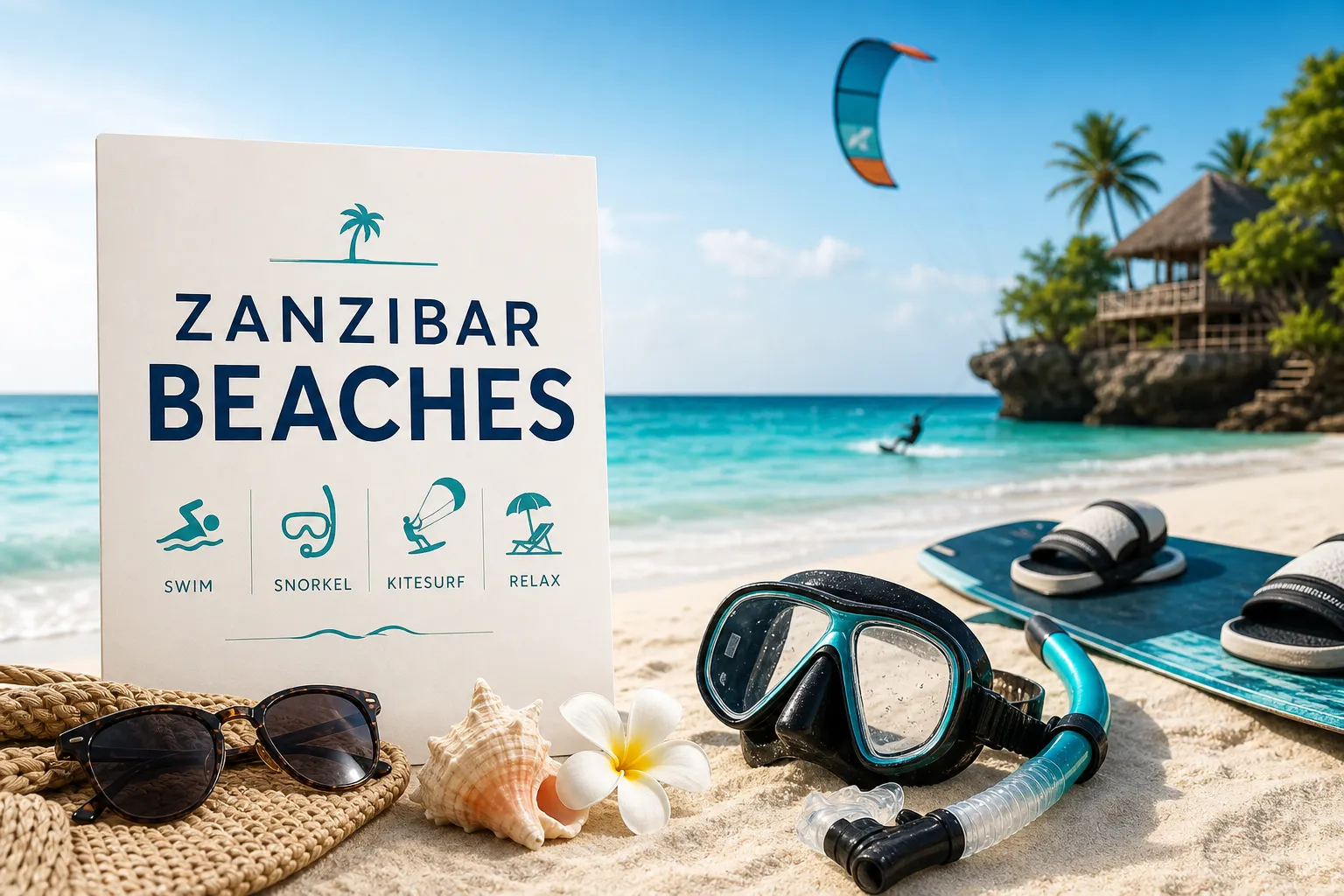
North coast Zanzibar beaches: Nungwi and Kendwa
Why Nungwi works for every tide and every traveler
Nungwi sits at the island's northern tip, and its geology is the reason it works for everyone. The seafloor drops steeply offshore, creating a tidal variation of only one to two meters compared to the dramatic one-kilometer recession you'll see on the east coast. That means swimming is possible at any hour of the day, no tide chart required. You get white sand, a calm lagoon, a lively beach village full of seafood restaurants, and dhow sunset cruises that are genuinely worth the cliché.
Accommodation runs from mid-range guesthouses to luxury beachfront resorts, so the price range suits most budgets. The village atmosphere adds texture beyond just the beach: there's a fish market, local cafes, and boat builders who've been crafting traditional dhows for generations. If you want one north coast base that gives you everything, Nungwi delivers.
Kendwa: the quieter alternative three kilometers west
Kendwa shares Nungwi's tide advantage but trades the bustle for a noticeably calmer, more laid-back feel. It suits couples and solo travelers who want all-day swimming without navigating a busy beach village. The stretch of sand is beautiful, the water is clear, and the pace is slower in the best possible way. Where to stay in Zanzibar beach towns like Kendwa depends on your budget, but options range from simple bungalows to mid-range boutique stays, most within walking distance of the water.
Kendwa is only a short tuk-tuk ride from Nungwi, so you can base yourself here and still access Nungwi's restaurants and nightlife whenever you feel like it. That flexibility makes it one of the smarter choices on the island. Best for: families, couples, first-time visitors, and anyone who doesn't want to plan swims around a tide chart.
East coast Zanzibar beaches: Paje, Jambiani, Matemwe, and Kiwengwa
Paje and Jambiani: where the wind and water sport crowd lives
Paje is Zanzibar's kitesurfing capital, and it earns that title. The shallow lagoon stretches 1.5 kilometers, the trade winds are consistent, and the roster of kite schools is serious. There are two distinct seasons to know before you book. The Kaskazi season runs December through March with lighter northeast winds at 12 to 20 knots, making it the better window for beginners learning to launch and land. The Kusi season runs June through September with stronger southwest winds at 15 to 25 knots, which is what experienced riders fly in for.
Jambiani sits five kilometers south of Paje and offers nearly identical wind conditions with fewer crowds and a longer sandbank. If you want the same kitesurfing access without competing for water with a dozen other kiteboarders, Jambiani is the answer. Both beaches are on the east coast, which means the tidal recession is dramatic: water retreats up to one kilometer at low tide, exposing seabed for hours. Swimming and snorkeling boat departures must align with high tide. This isn't a deal-breaker, just a scheduling reality you need to build around.
Matemwe and Kiwengwa: snorkeling access and secluded Zanzibar beaches
Matemwe is the launchpad for Mnemba Atoll boat trips, which makes it the premier base for snorkelers and divers. The reef-protected water near shore stays calmer than Paje or Jambiani, and the village has a quieter, more local atmosphere than the north coast resort strip. If getting to Mnemba is your priority, staying in Matemwe removes one logistical step from the equation.
Kiwengwa holds the distinction of Zanzibar's longest white sand beach, with solid resort infrastructure for travelers who want comfort alongside their water activities. Like all east coast Zanzibar beaches, both Matemwe and Kiwengwa are tide-dependent for swimming. Plan water activities for the two-to-four hour window around high tide, and use low tide for reef walking, photography, and exploring the exposed seabed.
Mnemba Atoll: Zanzibar's best snorkeling and diving destination
What makes Mnemba the island's snorkeling crown jewel
Mnemba Atoll is a protected marine reserve off Zanzibar's northeast coast, accessible by a short boat trip from Matemwe. Visibility reaches up to 30 meters on a good day. The reef hosts hard corals, surgeonfish, Moorish idols, green sea turtles, and spinner dolphins that show up reliably enough to plan a trip around. The north coast reef stretch runs approximately one kilometer and offers consistent conditions that shore snorkeling simply can't replicate.
The atoll island itself is private, home to an exclusive resort that controls access to the beach. The surrounding reef is a different matter: it's accessible to day visitors through guided snorkeling and diving trips booked from Matemwe or Stone Town. You don't need to pay resort prices to experience the best reef in East Africa.
How to arrange a Mnemba trip and what to expect
Shared group snorkeling trips from Matemwe typically run $45 to $60 per person in 2026, with a $25 per person government marine park fee payable on the day of the trip. Private boat tours start around $60 to $100 depending on group size and itinerary. Most trips run three to four hours and include snorkel gear, a guide, water, and snacks. Boat departure timing aligns with high tide, so your operator will set the schedule based on Zanzibar tide times for your specific travel dates.
If you want a west coast alternative with equally pristine reef conditions, Chumbe Island is worth researching. It hosts one of the best-preserved coral gardens in East Africa, with over 200 hard coral species accessible via guided conservation tours. For most travelers, though, Mnemba is worth building a full morning around. The marine density alone justifies the logistics.
When to go: seasons, winds, and tide timing
Best months for beach relaxing and calm swimming
Zanzibar has two rainy seasons that shape your beach options. The long rains, known locally as Masika, run from mid-March through the end of May, peaking in April with heavy tropical downpours that churn the sea and reduce reef visibility significantly. The short rains, called Vuli, fall from late October through early December, peaking in November. These are more manageable: brief afternoon showers with sunny mornings that still leave plenty of usable beach time.
The most reliable windows for beach weather are June through October and December through February. For pure swimming and relaxation, December through March hits a sweet spot: dry, warm, and calm, with the lighter Kaskazi winds that keep the north coast particularly inviting. If you're flexible on dates, this is the window to aim for.
How the trade wind seasons shape your beach plans
If kitesurfing is your main goal, July and August deliver the strongest and most consistent Kusi winds at Paje and Jambiani, with gusts reaching 25 to 28 knots on peak days. These same months bring rougher conditions on the north coast, so the two objectives don't always overlap neatly. Decide your primary beach activity first, then pick the season around it. Trying to fit perfect kite conditions and perfect north coast swimming into the same week is harder than it sounds.
On Zanzibar tide times: high and low tide shift forward roughly 50 minutes each day, so a tide chart accurate for your specific travel dates is essential if you're staying on the east coast. Check the Tanzania Meteorological Authority tide tables before you go. Low tide is genuinely useful for reef walking and photography. High tide is when you swim, snorkel, and board your boat to Mnemba. Plan accordingly and the tidal rhythm becomes part of the experience rather than a frustration.
Practical tips for American travelers heading to Zanzibar
Visa entry, safety, and what to know before you land
US passport holders need a Tanzania tourist visa for any trip to Zanzibar. There's no separate island visa: the Tanzania entry document covers both the mainland and Zanzibar. In 2026, US citizens are required to purchase a Multiple Entry Visa at $100 USD, applied for online at visa.immigration.go.tz or obtained on arrival with cash in Series 2009 or newer US dollar bills. Processing online typically takes five to ten business days, so don't leave this until the week before departure. You'll also need proof of inbound travel insurance from the Zanzibar Insurance Corporation, valid for the duration of your stay.
The US State Department currently rates Tanzania at Level 2: Exercise Increased Caution, the same classification as many Western European countries. The primary concerns are petty crime and opportunistic theft, not violence. Zanzibar is generally safe for tourists, including solo female travelers, when standard precautions are followed: use pre-arranged transfers rather than walking isolated beaches after dark, dress modestly when moving through Stone Town or local villages, and store valuables securely. USD is widely accepted at beach resorts alongside the Tanzanian shilling.
Getting from the airport to your Zanzibar beach town
Abeid Amani Karume International Airport (ZNZ) sits on the island's west coast near Stone Town, with direct connections from Dar es Salaam and domestic links from Arusha and Kilimanjaro. Travel times to the main beach areas vary meaningfully based on where you're headed.
- Nungwi and Kendwa: approximately 68 km from the airport, around 1.5 hours by private transfer
- Matemwe: approximately 35 to 40 km, around 45 to 60 minutes, making it the closest of the main beach areas to the airport
- Jambiani: approximately 60 to 65 km via winding coastal roads, around 1.25 to 1.5 hours
Private transfers are the recommended option for reliability and comfort. Dala-dala public buses run routes across the island and are significantly cheaper, but they're slow, unpredictable, and not ideal for a first arrival with luggage. Most resorts can arrange airport pickups directly, or your tour operator can book it in advance so a driver is waiting when you land.
From safari to beach: combining the northern circuit with Zanzibar
Why the northern circuit and Zanzibar beaches pair perfectly
The logic is straightforward. You land at Kilimanjaro International Airport, spend five to seven days moving through Tarangire, the Serengeti, and Ngorongoro Crater with a certified guide and a proper 4x4 safari vehicle. Then you take a short domestic flight to Zanzibar for four to five days of beach recovery. The contrast is the whole point: wildlife drama followed by island stillness, all within a single two-week trip. No country-switching, no complicated logistics, just one of the most satisfying itinerary arcs in African travel.
This combination is increasingly popular with American couples and honeymooners who want the full East Africa experience without stretching across multiple countries. The northern circuit handles the wildlife bucket list. Zanzibar handles everything else: the sunsets, the seafood, the slow mornings, and the snorkeling that safari schedules rarely allow. Together they create a trip that's genuinely hard to top.
How Kilimanjaro Local Trips handles the full transition
Kilimanjaro Local Trips builds customized itineraries that cover both legs of this combination. The northern circuit safari comes with certified local guides, comfortable 4x4 vehicles, and accommodation options matched to your budget and preferences. The Zanzibar extension includes recommendations on where to stay in Zanzibar beach towns that match your goals, airport transfer coordination, and organized excursions including Mnemba Atoll snorkeling trips and diving packages.
Everything is priced transparently in USD with no hidden costs added at the end. There's no juggling multiple operators, no separate booking platforms to manage, and no gap in support between the safari leg and the beach leg. For American travelers planning this combination, having a single locally owned Tanzania operator manage both experiences from start to finish removes the biggest friction point in the whole trip. Reach out to Kilimanjaro Local Trips to start building an itinerary around your priorities.
Choose your Zanzibar beach, then plan backward
Zanzibar beaches aren't interchangeable. Nungwi and Kendwa win for all-day swimming, families, and travelers who don't want to think about tides. Paje and Jambiani are built for kitesurfers and windsurfers who came specifically for the Kusi or Kaskazi winds. Matemwe is your launchpad for Mnemba Atoll, and Kiwengwa gives you the longest beach on the island with solid resort infrastructure behind it. Each beach serves a specific type of traveler. Knowing which one matches your priorities is what separates a good Zanzibar trip from a great one.
For American travelers, the practical checklist before booking looks like this: decide your primary beach activity, apply for your Tanzania e-visa well in advance at $100 for a Multiple Entry Visa, pull a Zanzibar tide chart for your specific travel dates if you're staying on the east coast, and decide whether you're combining with a northern circuit safari, which you genuinely should consider. The flight between Arusha and Zanzibar is short enough that skipping one or the other feels like a missed opportunity.
If you want someone to handle the full Tanzania trip from the Serengeti to the shore, Kilimanjaro Local Tripsspecializes in exactly this kind of end-to-end itinerary. Get in touch and start building your trip around what matters most to you.