
African Safari Tours: How to Choose the Right Destination for You
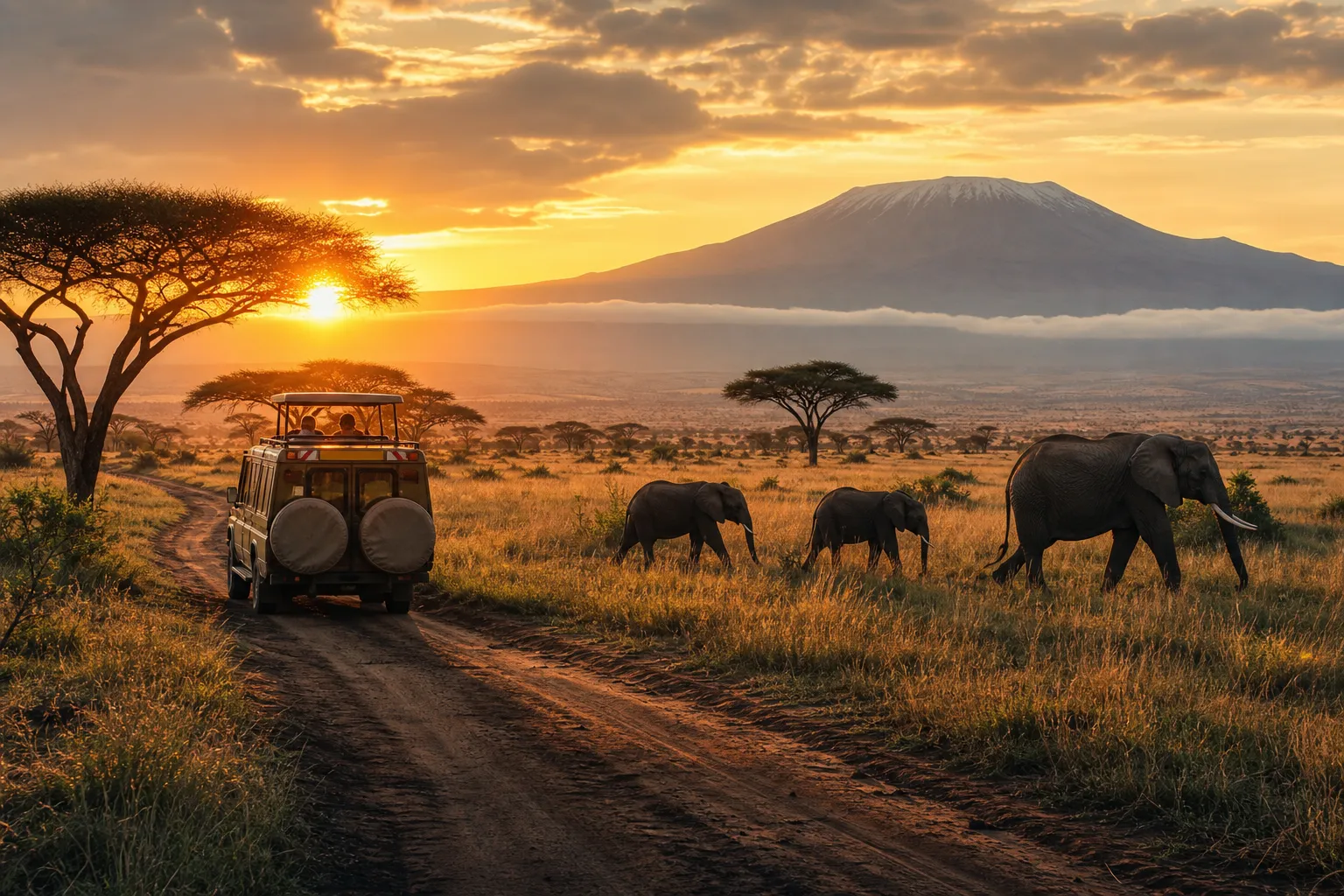
Most American travelers researching african safari tours and African safari vacations eventually land on the same four countries: Tanzania, Kenya, South Africa, and Botswana. Each one delivers something genuinely remarkable, but the right choice depends entirely on your priorities. Your budget, travel style, timing, and what you actually want to see will do most of the filtering for you.
The problem isn't a lack of options. It's that the options all look equally compelling from a distance, and most destination guides sell you on the dream without helping you figure out which dream actually fits your trip. At Kilimanjaro Local Trips, we commonly hear from American travelers who arrive in Tanzania having spent weeks comparing safari packages online and still feeling uncertain about whether they made the right call. Most of them wish they'd had a clearer framework earlier in the process.
This article is that framework. By the end, you'll know which two or three Africa safari packages to shortlist, what realistic costs look like in 2026, and exactly what to verify before you pay a deposit.
What Sets Each Major Safari Destination Apart
The four big safari countries aren't interchangeable. Each one has a distinct profile, and understanding those differences is the fastest way to narrow your list.
Tanzania is home to the Serengeti, Ngorongoro Crater, and Tarangire. These three ecosystems together deliver more wildlife variety than almost any comparable route on the continent. It's also the only country where you can witness the entire Great Migration cycle, from calving season in the southern Serengeti (January through March) to the famous river crossings in the north (July through October). Add a Zanzibar beach extension and you have the most complete African safari vacation available within a single two-week trip.
Kenya's Masai Mara is exceptional, particularly for the Mara River crossings from July through October. The infrastructure is well developed, which makes logistics smooth for first-timers. That same infrastructure also means larger crowds during peak season, and Kenya's park fees can increase overall costs in some cases, compare total package inclusions carefully when evaluating prices against comparable Tanzania itineraries.
South Africa offers something the East African countries don't: a self-drive option. Kruger National Park has some of the highest Big Five encounter rates on the continent, several malaria-free private reserves, and gateway cities like Cape Town that give the trip natural extensions. It's the most accessible entry point for travelers who want a structured experience without full guided logistics.
Botswana operates on a high-cost, low-volume conservation model. The Okavango Delta and Chobe deliver outstanding wildlife in genuinely remote settings, with far fewer vehicles per sighting than you'll encounter in the Serengeti or Mara at peak season. The tradeoff is price. Botswana skews heavily toward the luxury end and isn't the right fit if you're working with a mid-range budget.
African Safari Tours: Cost and Best Time to Visit
What Wildlife Tours in Africa Actually Cost in 2026
Here's where most travelers get stuck: the price ranges are wide, and a single Google search returns everything from $150-a-day group tours to $3,000-a-day private camps. The number that matters is your per-person daily cost, and that figure determines which destinations and accommodations are realistic for your trip.
Using 2026 pricing from across the major safari markets, here's how the numbers break down by trip length:
| Trip length | Budget | Mid-range | Luxury |
|---|---|---|---|
| 5 days | $750, $1,750 | $1,750, $4,000 | $4,500, $15,000+ |
| 7 days | $1,050, $2,450 | $2,450, $5,600 | $6,300, $21,000+ |
| 10 days | $1,500, $3,500 | $3,500, $8,000 | $9,000, $30,000+ |
Botswana skews almost entirely toward the upper end of these ranges. Tanzania and Kenya offer the widest spread across all three tiers, and South Africa is the most accessible entry point for budget-conscious travelers who are comfortable with a self-drive format.
On inclusions: most reputable packages cover park fees, accommodation, scheduled game drives, meals, ground transfers, and a driver-guide. What they typically exclude is international and domestic flights, visas, travel insurance, tips, and alcohol. Always confirm whether park and conservation fees are bundled into the quoted price. In Tanzania, park and conservation fees can add tens of dollars per person per day depending on the park and season, confirm this line item before accepting any quote.
For American travelers specifically, Tanzania offers a notable value advantage. Many local operators price packages in USD, which can eliminate currency conversion markups. Booking directly with a Tanzania-based company versus routing through a Western travel agency can save anywhere from $100 to $500 per person per day. In one itinerary we've reviewed side by side, the markup reached $164 per person per day on a 7-day mid-range package. That difference compounds quickly across a 10-day trip.
For a helpful external reference on current pricing ranges and how daily costs break down across budget tiers, see this African safari cost guide for 2026.
Best Time to Visit Each Country for Wildlife and Lower Crowds
Timing is one of the most effective filters you have. The dry season across all four countries runs roughly June through October, and this is when wildlife viewing peaks as animals concentrate around water sources. July through September is also peak crowd season, especially in Kenya's Masai Mara and Tanzania's northern Serengeti.
South Africa's best viewing window falls in the dry winter months of May through September. September is generally the strongest month for visibility in Kruger, as vegetation thins and animals cluster near remaining water sources. Botswana peaks from August through October for game density in the Okavango Delta and Chobe.
Shoulder seasons deserve more attention than they typically get. May through June and October through November offer strong wildlife viewing with noticeably fewer visitors across Tanzania and Kenya. Tanzania's short dry spell in January and February lines up with calving season in the southern Serengeti, one of the most underrated wildlife events on the continent, where newborn wildebeest attract large concentrations of predators and crowds are a fraction of peak-season levels.
For American travelers flying from major US hubs, shoulder season departures often mean lower airfares on top of reduced lodge rates. Those combined savings can shift your total budget from mid-range into a higher tier of accommodation for the same overall spend. For more detail on timing and the best windows to visit, this guide on the best time to go on safari is a useful resource. You can also read our month-by-month breakdown in the Best Time to Visit Tanzania: A Complete Month-by-Month Guide.
Choosing African Safari Tours by Travel Style
Use this section as your decision matrix. Your priorities should determine your shortlist, not the destination's reputation.
If your goal is seeing the most wildlife in the shortest time, Tanzania's northern circuit packs more species diversity into a 7-day itinerary than almost any other route in Africa. The Serengeti alone supports over 70 mammal species and 500 bird species. For more on that concentration of wildlife, see this overview of Serengeti wildlife diversity. Ngorongoro Crater contains roughly 25,000 large animals inside a self-contained volcanic caldera, with one of the highest predator densities on the continent, making it one of the best places in Africa to see all five Big Five species in a single day. For a concise definition and context around the term, see this resource on the Big Five.
If you're working with a specific budget, affordable safari tours are easiest to find in South Africa's self-drive Kruger format or Tanzania's group departure options. Mid-range travelers will find the strongest combination of iconic wildlife and value in Tanzania's northern circuit or Kenya's Masai Mara, both offer strong Kenya safari packages and Tanzania itineraries at this price point. For luxury safari packages with genuine exclusivity, Botswana's Okavango Delta camps and Tanzania's private conservancy options offer secluded camps and exclusive game-drive areas at premium rates.
If you want more than just game drives, Tanzania is the only destination where a Kilimanjaro climb, a northern circuit safari, and a Zanzibar beach extension all connect within a single logical two-week trip. South Africa adds Cape Town, wine country, and the Garden Route as natural extensions. Kenya has a south coast beach strip, but it doesn't offer the same island appeal or snorkeling access that Zanzibar provides.
Why Tanzania Keeps Rising to the Top for American Safari Travelers
The Serengeti hosts the Great Migration year-round, not just during the seasonal window when herds cross into Kenya's Masai Mara. Great Migration in Tanzania: Complete Guide to Witnessing Africa's Greatest Wildlife Spectacle explains the full cycle and where to position your trip to catch specific phases like calving or river crossings. Ngorongoro Crater is one of the best locations in Africa to see all five Big Five species in a single day, thanks to its self-contained caldera and exceptionally high animal density. Zanzibar sits just a short domestic flight away, making a three-to-four night beach finish a natural and logistically simple add-on that no other major safari country can replicate as seamlessly.
The advantage of booking with a locally based Tanzania operator is real and measurable. Large Western travel agencies add substantial markup over what local operators charge for exactly the same experience. A Tanzania-based company has direct relationships with lodges, park authorities, and guides, that means better access, faster problem-solving when logistics shift, and no middleman pricing layered into your quote.
Kilimanjaro Local Trips is a locally owned Tanzania operator built for the kind of end-to-end African safari experience that American travelers are looking for. They offer certified local guides, transparent USD pricing, fully customizable itineraries, and 24/7 in-trip support. For travelers who want authentic, locally guided wildlife experiences without the inflated costs of booking through a Western agency, Kilimanjaro Local Trips is the kind of operator worth putting at the top of your shortlist.
A practical 7-day Tanzania itinerary looks like this: one night in Tarangire, three nights in the Serengeti, two nights at Ngorongoro Crater, then fly to Zanzibar. That's bookable within a mid-range budget of $2,450, $5,600 per person. Add three days and you can include a hot air balloon safari over the Serengeti (prices vary by operator and season, often starting around $500, $600 per person) and snorkeling at Mnemba Atoll off Zanzibar's northeast coast, still within the mid-range tier if you book directly with a local operator.
What to Confirm Before You Book Any African Safari Package
The inclusions question catches more travelers off guard than any other part of the booking process. Ask specifically whether park and conservation fees are included, and whether domestic flights between parks or from safari to Zanzibar are part of the quoted price or listed separately. Confirm whether meals are full board (all meals) or half board (breakfast and dinner only). Get tipping expectations in writing, gratuities for guides and lodge staff are commonly excluded from packages, so ask the operator for their recommended amounts upfront.
When comparing operators, shortlist companies that provide itemized quotes rather than a single total price. An itemized quote tells you exactly what you're paying for and makes it easier to compare apples to apples. Check whether the company is registered and licensed in the destination country, a locally licensed Tanzania operator has legal accountability that a foreign reseller does not. Cancellation and rescheduling policies vary widely, so ask for exact deadlines and any applicable penalties before paying a deposit. For practical booking and pre-trip planning advice, see our Safari Tips.
Travel insurance covering medical evacuation is non-negotiable for safari travel. It's excluded from virtually every package and essential for remote-area coverage, particularly in the Serengeti and Ngorongoro where the nearest major medical facility is hours away.
The Clearest Path to Your Shortlist
The comparison framework is straightforward. Tanzania and Kenya lead for wildlife diversity and Great Migration access. South Africa wins on accessibility, Big Five reliability, and self-drive flexibility. Botswana delivers exclusivity and remote wilderness at a premium that reflects the experience. Your budget and travel style should do most of the filtering from there.
For most American travelers who want iconic wildlife, dramatic landscapes, and a beach finish within a single two-week trip, Tanzania delivers more cleanly than any other single destination. The northern circuit alone covers more ecosystem variety than most comparable multi-day routes across the continent, and the Zanzibar extension adds a dimension that nothing in South Africa or Kenya can match within the same geographic footprint.
If african safari tours are on your shortlist, contact Kilimanjaro Local Trips to start building your itinerary. They offer a direct, locally guided path to the Serengeti, Ngorongoro, and Zanzibar, without the overhead of booking through a Western agency and with transparent pricing from day one. Set your destination, lock in your budget tier, and let a licensed local operator handle the rest. Everything else falls into place from there.